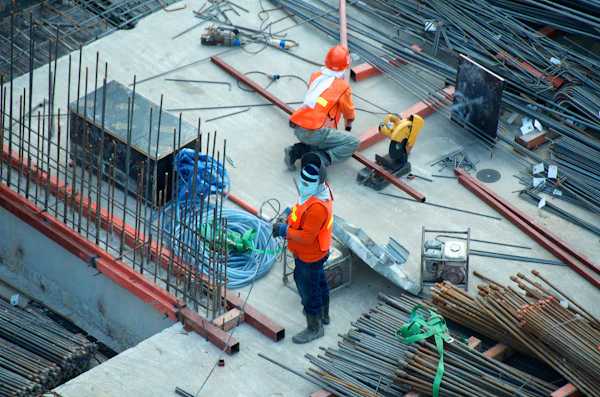
How to Build a Deck
Complete Step-by-Step Guide for Canadian Homeowners
Complete Step-by-Step Guide for Canadian Homeowners
Planning & Design
Building a deck in Canada starts with careful planning. Before you pick up a hammer, you need to consider your yard's layout, local bylaws, intended use, and budget. Most Canadian decks range from 150 to 400 square feet and cost between $15,000 and $45,000 fully installed.
Key planning decisions:
- Determine your deck size — measure your available yard space and consider how you'll use it (dining, lounging, entertaining)
- Choose your height — ground-level decks (under 24") are simpler and may not require a permit in some provinces
- Pick your shape — rectangular is most cost-effective, but L-shapes and multi-level designs add visual interest
- Select your material — pressure-treated wood ($3–$8/sqft) is the most affordable; composite ($8–$22/sqft) offers low maintenance
- Set a realistic budget — include 15–20% contingency for unexpected costs like rocky soil or drainage issues
Getting Permits
Most Canadian municipalities require a building permit for any deck higher than 24 inches (600mm) above grade, or any deck attached to your home. Permit costs range from $100 to $500 depending on your municipality.
What you typically need to submit:
- Site plan showing your property lines and setbacks
- Deck drawings with dimensions, height, and structural details
- Footing depth specifications (must meet local frost line requirements)
- Railing details if the deck is 24" or more above grade
- Proof of property ownership or authorization
Processing times vary: Toronto averages 10–15 business days, while smaller municipalities may take 2–4 weeks. Some cities like Ottawa offer express permits for simple deck projects.
Foundation & Footings
Canadian building codes require deck footings to extend below the frost line to prevent heaving. This is one of the most critical differences between building a deck in Canada versus warmer climates.
Frost line depths by region:
- Southern Ontario / Lower Mainland BC3–4 feet
- Ottawa / Montreal / Winnipeg4–5 feet
- Edmonton / Saskatoon / Northern ON5–6 feet
- Northern Canada6+ feet
Common foundation methods: Sonotubes (most popular in Canada — $15–$30 each), helical piles ($150–$300 each, ideal for rocky soil), and concrete pier blocks (only for ground-level, freestanding decks).
Framing the Deck
The frame is the structural skeleton of your deck. In Canada, framing lumber is almost always pressure-treated SPF (Spruce-Pine-Fir), which is abundant and affordable at Canadian lumber yards.
Key framing components:
- Ledger board — bolted to your house foundation (use lag bolts, not nails). Must be flashed properly to prevent water damage.
- Beam — typically doubled 2x10 or 2x12, supported by posts on footings. Spans depend on joist spacing and load.
- Joists — usually 2x8 or 2x10, spaced 16" on centre (12" for composite decking). Crown side up.
- Rim/band joist — encloses the perimeter and provides a nailing surface for fascia boards.
- Blocking — mid-span blocking prevents joist twisting and adds rigidity.
For snow load, Canadian decks must be designed for at least 40 psf (pounds per square foot) of live load plus applicable snow load for your region — which can add 20–60 psf in heavy snowfall areas.
Installing Decking Boards
With the frame complete, it's time to install your decking surface. The method varies by material:
Pressure-treated wood: Face-screw with coated deck screws, leaving 1/8" gaps between boards for drainage and expansion. Pre-drill near board ends to prevent splitting.
Cedar / Redwood: Same face-screw method, but use stainless steel screws to prevent tannin staining. Start from the house and work outward.
Composite: Most brands use hidden clip systems for a clean, fastener-free surface. Follow manufacturer spacing — typically 3/16" for expansion. In Canadian climates, install at the temperature mid-point (10–15°C) for optimal gap sizing.
Railings & Stairs
Canadian building codes require railings on any deck 24 inches (600mm) or more above grade. Key code requirements:
- Minimum height: 36 inches for residential (42 inches for decks more than 5'10" above grade)
- Baluster spacing: Maximum 4 inches (100mm) — a 4" sphere must not pass through
- No climbable horizontal elements in the bottom 24 inches
- Must withstand 200 lbs of point load at the top rail
- Graspable handrail required on stairs (1.25" to 2" diameter)
Popular railing materials in Canada:
- Pressure-treated wood$20–$35/lin ft
- Aluminum (powder-coated)$40–$80/lin ft
- Tempered glass panels$80–$200/lin ft
- Stainless cable$60–$120/lin ft
Finishing Touches
The details that turn a deck into an outdoor living space:
- Staining & sealing — Apply within 3–6 months of building for pressure-treated wood. Use a penetrating oil stain for Canadian climates.
- Lighting — LED post caps ($15–$40 each), stair risers ($10–$25 each), and under-rail strips create beautiful evening ambiance.
- Skirting — Lattice ($2–$5/sqft) or solid board skirting to conceal the understructure and prevent animals from nesting.
- Furniture — Choose weather-resistant pieces rated for Canadian winters. Teak, aluminum, and all-weather wicker are top picks.
- Landscaping — Integrate your deck with gardens, planters, and pathways for a cohesive outdoor space.
Related Materials


Ready to Start Your Deck Project?
Get free quotes from verified Canadian contractors in your area.
Get Free Quotes →
